
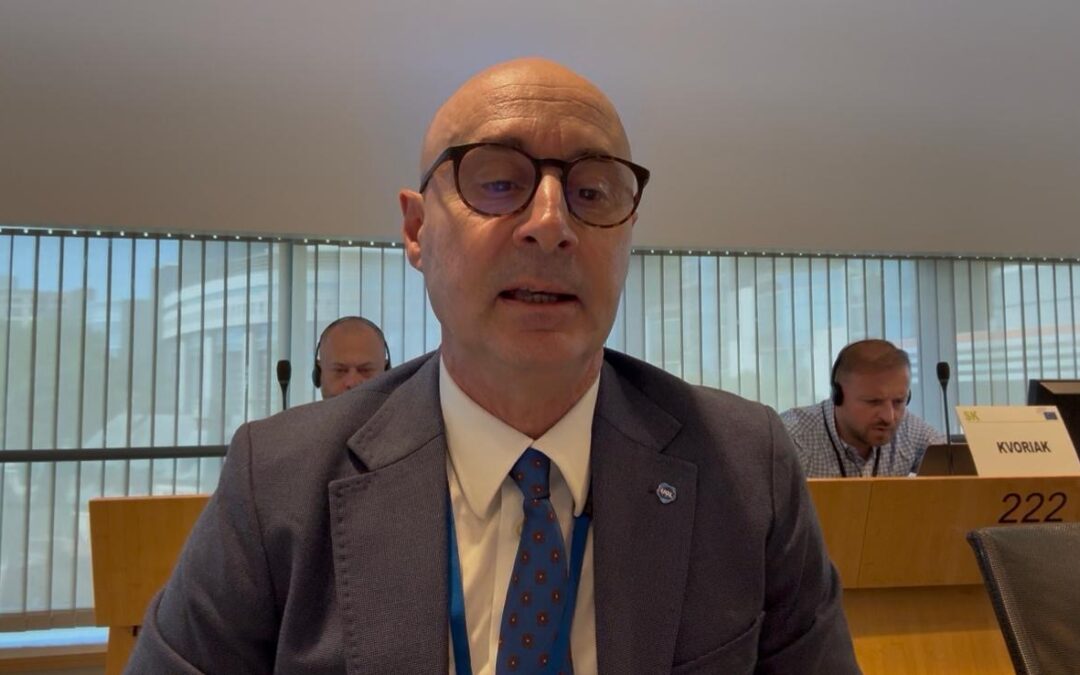
IL CESE E LA STRATEGIA PER GLI INVESTIMENTI NELL’ENERGIA PULITA
L’attuale contesto geopolitico evidenzia i rischi connessi alla dipendenza dell’Europa dalle importazioni di combustibili fossili. I cittadini e le industrie sono giustamente preoccupati per i prezzi elevati dell’energia. Investire, dunque, nell’energia pulita è la soluzione a medio termine più accessibile ed affidabile dal punto di vista economico. Proprio di queste tematiche si è discusso nel corso della riunione della Sezione TEN (Trasporti, Energia, Infrastrutture) del CESE (Comitato Economico e Sociale Europeo), svoltasi a Bruxelles la scorsa settimana (26 Maggio). Al dibattito sulla “Strategia per gli investimenti nell’energia pulita” ha preso parte il Consigliere Ulgiati il quale ha affermato che «chi gestisce l’energia, gestisce anche la democrazia», sottolineando come l’energia serva non soltanto ai cittadini, alle famiglie, alle imprese, alle industrie energivore, ma anche ai data center. Nella transizione energetica da qui al 2040 la Commissione Ue prevede importanti investimenti con differenti modalità. «Ma – si interroga Ulgiati – sono sufficienti questi investimenti, oppure occorre lavorare per ridurre la burocrazia su tutta la filiera ed abbattere i tempi autorizzativi?» Riguardo alla formazione poi è stato evidenziato come sia fondamentale avere le competenze adeguate per far funzionare le nuove tecnologie del futuro. «Inoltre – ha proseguito il Consigliere del CESE – nelle aziende occorre una maggiore partecipazione dei lavoratori agli obiettivi delle imprese, così come è importante il coinvolgimento dei consumatori che non sono soltanto i fruitori dei servizi e dell’energia prodotta, bensì indirettamente anche gli investitori. Ed in aggiunta – ha precisato Ulgiati – non dobbiamo guardare solo ed esclusivamente alle rinnovabili come panacea che risolva tutti i problemi; debbono invece essere rese operative tutte le nuove tecnologie, dalla cattura e stoccaggio della Co2 al nucleare con gli SMR, all’idrogeno, ed in prospettiva anche alla fusione nucleare su cui molti Paesi importanti stanno investendo». Infine, quanto al reperimento delle risorse per gli investimenti, questo forse è il problema più grande per Ulgiati, secondo il quale «occorre fare sacrifici per affrontare il futuro, altrimenti saremo sempre dipendenti da qualche Paese canaglia e mai liberi».
UE: PARITÀ DI GENERE ANCORA LONTANA
La parità di genere rappresenta uno dei valori essenziali su cui si fonda l’Unione Europea. Sebbene negli ultimi decenni siano stati compiuti progressi significativi nella partecipazione delle donne alla vita economica, sociale e politica, persistono ancora importanti disuguaglianze tra donne e uomini, soprattutto nel lavoro di cura. È quanto registra l’Eurostat (Ufficio Statistico della Ue) in un report di pochi giorni fa in cui documenta un boom di lavoratrici nel settore scientifico, ma certifica una impietosa disparità nel ricorso al part-time per conciliare vita familiare e professionale. Su oltre 81,6 milioni di persone impiegate nel settore scientifico o tecnologico, le donne hanno ormai superato la metà della forza lavoro, rappresentando il 52,5% del totale (42,8 milioni di lavoratrici). Permangono tuttavia disparità regionali che vedono la Lettonia annoverare una presenza femminile del 62,4%, mentre l’Italia centrale si ferma al 47,2%, tra le quote più basse dell’intera Unione. A prescindere comunque dalle differenze tra le varie regioni europee si attesta sicuramente una crescita professionale delle donne che deve però fare i conti con un carico di cura domestica ancora fortemente squilibrato e che si riflette nelle scelte lavorative. Secondo Eurostat il 31,7% delle donne con figli lavora part-time, contro appena il 5,1% degli uomini e la situazione non cambia neanche in caso di assenza di prole. In un contesto europeo in evoluzione il Parlamento Europeo, nella Sessione Plenaria di Maggio, ha approvato una Risoluzione sul lavoro di cura e su uno Statuto europeo dei Caregiver. L’obiettivo è quello di una transizione verso una “società dell’assistenza” che riconosca il lavoro di cura quale pilastro fondamentale dell’economia e dei diritti umani e che garantisca standard minimi di protezione, nonché il riconoscimento delle competenze acquisite, per chi assiste un familiare malato. Investire nella parità di genere, dunque, non è più solo una scelta etica, ma una leva strategica per il futuro della società nel suo complesso.
EN
THE EESC AND THE STRATEGY FOR INVESTMENTS IN CLEAN ENERGY
The current geopolitical context highlights the risks associated with Europe’s dependence on fossil fuel imports. Citizens and industries are rightly concerned about high energy prices. Investing in clean energy is therefore the most accessible and economically reliable medium-term solution. It was precisely these issues that were discussed during the meeting of the TEN (Transport, Energy, Infrastructure) Section of the EESC (European Economic and Social Committee), held in Brussels last week (26th of May). Councillor Ulgiati took part in the debate on the “Clean Energy Investment Strategy”, stating that «those who manage energy also manage democracy», emphasising that energy serves not only citizens, households, businesses and energy-intensive industries, but also data centres. In the energy transition between now and 2040, the EU Commission is planning significant investments through various channels. «But – Ulgiati asks – are these investments sufficient, or do we need to work to reduce bureaucracy across the entire supply chain and cut down on authorisation times?». With regard to training, it was highlighted that it is essential to have the right skills to make the new technologies of the future work. «Furthermore – continued the EESC member – there needs to be greater worker involvement in companies’ objectives, just as it is important to involve consumers, who are not merely users of the services and energy produced, but also, indirectly, investors. And in addition – Ulgiati clarified – we must not look solely and exclusively to renewables as a panacea that solves all problems; instead, all new technologies must be put into operation, from CO2 capture and storage to nuclear power with SMRs, to hydrogen, and in the future also to nuclear fusion, in which many major Countries are investing». Finally, as regards securing resources for investment, this is perhaps the biggest problem for Ulgiati, who believes that «we must make sacrifices to face the future; otherwise, we will always be dependent on some rogue State and never free».
EU: GENDER EQUALITY STILL A LONG WAY OFF
Gender equality is one of the core values on which the European Union is founded. Although significant progress has been made in recent decades regarding women’s participation in economic, social and political life, major inequalities between women and men still persist, particularly in care work. This is according to Eurostat (the EU’s Statistical Office) in a report published a few days ago, which documents a boom in female workers in the scientific sector but highlights a stark disparity in the use of part-time work to balance family and professional life. Of the more than 81.6 million people employed in the scientific or technological sector, women now account for over half the workforce, representing 52.5% of the total (42.8 million female workers). However, regional disparities remain, with Latvia recording a female presence of 62.4%, whilst Central Italy stands at 47.2%, among the lowest figures in the entire Union. Regardless of the differences between the various European regions, there is certainly professional growth among women, which must, however, contend with a domestic care burden that remains heavily skewed and is reflected in career choices. According to Eurostat, 31.7% of women with children work part-time, compared with just 5.1% of men, and the situation does not change even in the absence of children. Against the backdrop of a changing European landscape, the European Parliament, at its May Plenary Session, adopted a Resolution on care work and a European Statute for Caregivers. The aim is to transition towards a “care society” that recognises care work as a fundamental pillar of the economy and human rights, and which guarantees minimum standards of protection, as well as the recognition of acquired skills, for those who care for a sick family member. Investing in gender equality, therefore, is no longer merely an ethical choice, but a strategic lever for the future of society as a whole.
UGL NEWS dall'EUROPA n. 176 del 3 Giugno 2026EN - UGL NEWS from EUROPE n. 176 -3rd of June 2026


