CESE: ULGIATI A BRUXELLES PER LA SESSIONE PLENARIA DI GENNAIO
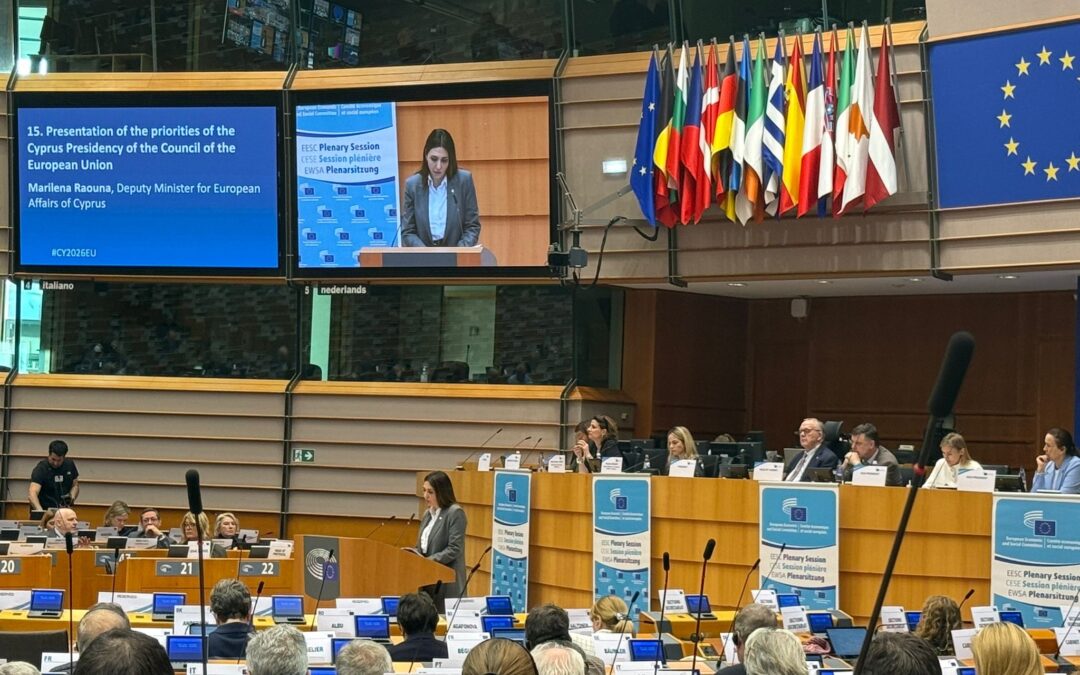
Il Consigliere Luigi Ulgiati ha partecipato alla Sessione Plenaria del Comitato Economico e Sociale Europeo (CESE) che si è svolta a Bruxelles il 21 e 22 Gennaio. All’ordine del giorno, in particolare, la presentazione delle priorità della Presidenza cipriota del Consiglio dell’Unione Europea ed il dibattito sull’Intelligenza Artificiale, tematica seguita con grande interesse dal Consigliere Ulgiati il quale, dopo essere intervenuto di recente sull’argomento in sede di adozione del Parere INT/1105 “Strategia per l’IA applicata” nella Sezione Mercato Unico, Produzione e Consumo (INT), ha preso nuovamente la parola in materia di Intelligenza Artificiale, questa volta nell’ambito della Sessione Plenaria appena conclusasi, per affermare l’importanza di tale tecnologia, da utilizzare con un approccio antropocentrico che pone l’uomo al centro di ogni considerazione e valutazione. L’IA sta cambiando processi, organizzazione e competenze. Serve dunque governare questo passaggio con responsabilità e visione, mettendo al centro lavoratrici e lavoratori, tutele, sicurezza e qualità del lavoro. Per Ulgiati «l’Europa deve avere una strategia sull’Intelligenza Artificiale, ed oggi più che mai dovrebbe averla su tutti i settori strategici. L’IA può essere una opportunità nell’efficientamento dell’industria, delle cure mediche, della difesa, delle reti, ma occorre considerare anche i rischi, quali la protezione dei dati, le disuguaglianze, ed è per questo che è necessaria una strategia antropocentrica». Il Consigliere Ulgiati ha poi evidenziato tre aspetti cruciali: lavoro, energia e creazione di un Osservatorio. «L’IA può incrementare la produttività, sostituire lavori routinari, potenziare la sicurezza – ha dichiarato Ulgiati – ma non va sottovalutato il rischio della perdita di posti di lavoro; debbono pertanto essere migliorate le competenze verso le nuove professioni. Tramite l’IA, inoltre, può essere ottimizzata l’efficienza e l’integrazione dei sistemi di produzione nella rete elettrica, ma soprattutto possono essere ridotti i costi a carico delle imprese e dei cittadini. Infine – ha concluso Ulgiati – la creazione di un Osservatorio composto dalle Parti Sociali, come quello già istituito in Italia, può monitorare gli sviluppi e l’applicazione dell’Intelligenza Artificiale».
UE: MERCOSUR, RATIFICA CONGELATA
Dopo 26 anni di negoziati, Unione Europea e Mercosur hanno firmato ufficialmente, il 17 Gennaio 2026, ad Asunción, capitale del Paraguay, l’accordo commerciale bilaterale che promette di creare la più vasta area di libero scambio al mondo: 700 milioni di cittadini/consumatori, sommando il mercato della Ue con quello di Brasile, Argentina, Uruguay e Paraguay. Messo da parte per anni, l’accordo di libero scambio con il Mercosur è stato rilanciato dall’Unione Europea dopo il ritorno alla Casa Bianca di Donal Trump in risposta alla sua guerra dei dazi e rappresenta in tal senso lo sforzo europeo, in atto in questi mesi, per tentare di allargare e consolidare i rapporti commerciali e non solo, ad altre aree del mondo al di fuori del Vecchio Continente: Sudamerica, ma anche India ed Asia Centrale. I negoziati tra i due blocchi sul nuovo testo sono stati portati a termine oltre un anno fa e si attendeva quindi la ratifica da parte del Parlamento Europeo per la sua entrata in vigore. Il 21 Gennaio 2026, per soli dieci voti, il Parlamento Europeo ha approvato la richiesta di rinvio del testo alla Corte di Giustizia della Ue per verificarne la compatibilità con i Trattati dell’Unione. Con 334 voti a favore, 324 contrari e 11 astensioni, gli eurodeputati hanno infatti adottato una risoluzione che chiede un parere giuridico sull’accordo al Tribunale del Lussemburgo, mossa che ritarda significativamente l’approvazione finale dell’intesa. Il rinvio adottato sospende, infatti, la procedura di ratifica da parte del Parlamento Europeo, il cui voto finale era previsto nei prossimi mesi. La sentenza della Corte Suprema della Ue potrebbe richiedere più di un anno per essere emessa, con la conseguenza di congelare a lungo la ratifica dell’accordo commerciale, a meno che l’Esecutivo europeo non proceda forzosamente a farlo entrare in vigore in via temporanea e provvisoria, operazione tecnicamente possibile ma molto rischiosa per le relazioni tra le Istituzioni europee. L’Accordo commerciale tra Ue e Paesi dell’America Latina ha dunque spaccato e diviso l’Europa, segnando, con il recente voto dell’emiciclo di Strasburgo, non solo una divisione tra partiti e gruppi parlamentari, ma anche una frattura tra mondo agricolo che esulta, ed industria che invece critica.
EN
EESC: ULGIATI IN BRUSSELS FOR THE JANUARY PLENARY SESSION
Councillor Luigi Ulgiati attended the Plenary Session of the European Economic and Social Committee (EESC) held in Brussels on the 21st and 22nd of January. The agenda included, in particular, the presentation of the priorities of the Cypriot Presidency of the Council of the European Union and the debate on Artificial Intelligence, a topic followed with great interest by Councillor Ulgiati who, after recently speaking on the subject during the adoption of the Opinion INT/1105 “Strategy for Applied AI” in the Single Market, Production and Consumption Section (INT), spoke again on the subject of Artificial Intelligence, this time at the Plenary Session that has just ended, to affirm the importance of this technology, which should be used with an anthropocentric approach that places humans at the centre of all considerations and assessments. AI is changing processes, organisation and skills. We therefore need to manage this transition with responsibility and vision, focusing on workers, protection, safety and quality of work. For Ulgiati «Europe must have a strategy on Artificial Intelligence, and today more than ever it should have one for all strategic sectors. AI can be an opportunity to improve efficiency in industry, healthcare, defence and networks, but we must also consider the risks, such as data protection, inequalities, which is why an anthropocentric strategy is necessary». Councillor Ulgiati then highlighted three crucial aspects: work, energy and the creation of an Observatory. «AI can increase productivity, replace routine jobs and enhance safety – said Ulgiati – but the risk of job losses should not be underestimated; skills for new professions must therefore be improved. Furthermore, AI can optimise the efficiency and integration of production systems in the electricity grid, but above all, it can reduce costs for businesses and citizens. Finally – concluded Ulgiati – the creation of an Observatory composed of Social Partners, such as the one already established in Italy, can monitor the development and application of Artificial Intelligence».
EU: MERCOSUR, RATIFICATION ON HOLD
After 26 years of negotiations, on the 17th of January 2026, in Asunción, the Capital of Paraguay, the European Union and Mercosur officially signed a bilateral trade agreement that promises to create the largest free trade area in the world: 700 million citizens/consumers, combining the EU market with those of Brazil, Argentina, Uruguay and Paraguay. Set aside for years, the free trade agreement with Mercosur was relaunched by the European Union after Donald Trump’s return to the White House in response to his tariff war and represents, in this sense, the European effort, underway in recent months, to try to expand and consolidate trade relations and more to other areas of the world outside the Old Continent: South America, but also India and Central Asia. Negotiations between the two blocs on the new text were completed over a year ago, and ratification by the European Parliament was therefore awaited for it to enter into force. On the 21st of January 2026, by just ten votes, the European Parliament approved the request to refer the text to the EU Court of Justice to verify its compatibility with the Union Treaties. With 334 votes in favour, 324 against and 11 abstentions, MEPs adopted a resolution requesting a legal opinion on the agreement from the Luxembourg Court, a move that significantly delays the final approval of the agreement. The postponement suspends the ratification process by the European Parliament, whose final vote was scheduled for the coming months. The ruling by the EU Supreme Court could take more than a year to be issued, with the result that the ratification of the trade agreement will be frozen for a long time, unless the European Executive forcibly proceeds to bring it into force on a temporary and provisional basis, which is technically possible but very risky for relations between the European Institutions. The trade agreement between the EU and Latin American Countries has therefore split and divided Europe, marking, with the recent vote in the Strasbourg chamber, not only a division between parties and parliamentary groups, but also a rift between the agricultural world, which is jubilant, and industry, which is critical.
UGL NEWS dall'EUROPA n. 158 del 23 Gennaio 2026EN - UGL NEWS from EUROPE n. 158 - 23rd of January 2026