CESE, ULGIATI PRESENTE ALLA PLENARIA DI FEBBRAIO
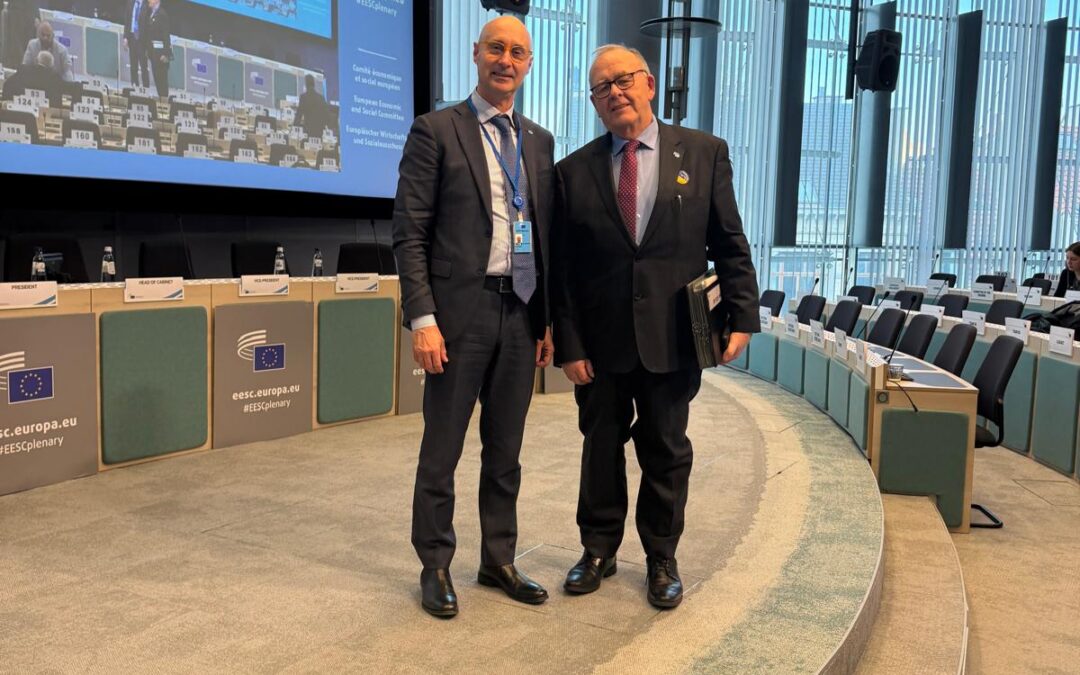
Si è appena conclusa a Bruxelles la Sessione Plenaria del CESE (Comitato Economico e Sociale Europeo) che ha visto il Consigliere Ulgiati intervenire su due tematiche di estrema attualità ed interesse. Il primo giorno Ulgiati ha preso la parola in merito all’adozione del Parere relativo alla “Connettività energetica ed alle reti elettriche” (su cui si era già espresso nel corso dell’adozione del medesimo Parere nella Sezione TEN, “Trasporti, Energia ed Infrastrutture” lo scorso 3 Febbraio) evidenziando come una rete elettrica sicura contribuisca a garantire l’approvvigionamento e la competitività del sistema industriale europeo e ribadendo che «occorrono piani energetici e strategie a lungo termine, sostenuti oltre che con i bilanci dei singoli Stati membri anche con quello dell’Unione Europea». Nella seconda giornata di lavori, invece, l’esponente del CESE ha interloquito nel corso del dibattito dal titolo: “Dall’ambizione all’azione: un piano europeo per alloggi economicamente accessibili a tutti”, spiegando come le politiche abitative siano una delle principali azioni sociali su cui i vari Governi sono chiamati a dare risposte. «La scarsità degli alloggi ed i costi delle case rappresentano le principali criticità che i cittadini devono sopportare – ha dichiarato Ulgiati – sia se trattasi di affitto che di acquisto. É una questione comune a tutti i Paesi dell’Unione Europea ed è per tale motivo che l’utilizzo dei fondi dedicati nel QFP (Quadro Finanziario Pluriennale) diviene una necessità non più rinviabile». Il Consigliere CESE ha poi messo in luce come al tema della casa si aggiunga il problema dei costi energetici e della povertà energetica. «È necessario prevedere nuovi modelli di edilizia residenziale pubblica, che contemplino il rispetto non solo per moderne abitazioni sempre più green, ma altresì per nuove costruzioni decorose e gradevoli anche da un punto di vista estetico, costruite intorno ad una rete di servizi e trasporti in grado di renderle fruibili e confortevoli». In conclusione, Ulgiati ha segnalato come un capitolo particolare vada dedicato agli alloggi per studenti, utili per dare a tutti le stesse possibilità di istruzione e di riscatto sociale, sottolineando il coinvolgimento indispensabile delle Parti Sociali nell’ambito di tali politiche abitative.
UE: STRATEGIA PER IL CONFINE ORIENTALE
L’Unione Europea si mobilita in favore del proprio fianco orientale, perché «non si tratta solo di frontiere nazionali, ma di frontiere europee e ciò che accade lì riguarda tutti gli europei», ha dichiarato il Vicepresidente esecutivo della Commissione Europea con delega a Coesione e Riforme, Raffaele Fitto, presentando pochi giorni fa la nuova Strategia dedicata all’Eastern Flank (Fianco Orientale). Ci sono circa 5 mila chilometri di confine (3.500 con Russia e Bielorussia, 1.500 con l’Ucraina) da rafforzare e regioni di frontiera in ben nove Stati membri (Finlandia, Estonia, Lettonia, Lituania, Polonia, Slovacchia, Ungheria, Romania e Bulgaria) da sostenere perché logorate da quattro anni di conflitto e guerra ibrida, dalla strumentalizzazione della migrazione utilizzata come arma, da perturbazioni economiche e commerciali, nonché dall’abbandono e dal declino demografico. La Strategia varata dalla Commissione europea è trasversale, in quanto se è vero che «sicurezza e difesa sono un prerequisito» è ugualmente vero che «queste regioni hanno anche bisogno di investimenti, servizi, connettività e prospettive economiche» ha ribadito il Vicepresidente esecutivo Fitto. Bruxelles ha individuato cinque priorità: sicurezza e resilienza, crescita e prosperità regionale, sfruttamento dei punti di forza locali, connettività, sostegno alle persone. Da un punto di vista finanziario la Strategia non sposta nuove risorse ma promette l’avvio di una piattaforma di finanziamento “EastInvest” – che verrà lanciata il prossimo 26 Febbraio – dedicata alle regioni frontaliere orientali, che riunirà la BEI (Banca Europea per gli Investimenti), le istituzioni finanziarie internazionali e numerose banche di promozione nazionali e regionali. Il nuovo strumento finanziario faciliterà l’accesso per i nove Paesi membri a prestiti e consulenza e si stima che tramite esso vengano mobilitati fino a 28 miliardi di euro tra il 2026 e il 2027 in investimenti privati e pubblici negli Stati membri interessati. Importanza fondamentale viene poi attribuita all’integrazione dell’energia elettrica degli Stati baltici nelle reti europee ed allo sviluppo di infrastrutture transfrontaliere per l’idrogeno, come il corridoio nordico-baltico per l’idrogeno. Il progetto promuove inoltre la connettività digitale tramite le reti di trasporto ed affronta infine il problema dello spopolamento e della carenza di manodopera, attraverso percorsi specifici di formazione ed occupazione.
EN
EESC, ULGIATI ATTENDS FEBRUARY PLENARY SESSION
The Plenary Session of the EESC (European Economic and Social Committee) has just concluded in Brussels, with Councillor Ulgiati speaking on two topics of extreme relevance and interest. On the first day, Ulgiati spoke on the adoption of the Opinion on “Energy connectivity and electricity networks” (on which he had already expressed his views during the adoption of the same Opinion in the TEN Section “Transport, Energy and Infrastructure” on the 3rd of February) highlighting how a secure electricity network helps to guarantee the supply and competitiveness of the European industrial system and reiterating that «long-term energy plans and strategies are needed, supported not only by the budgets of individual Member States but also by that of the European Union». On the second day of the meeting, the EESC representative took part in the debate entitled “From ambition to action: a European plan for affordable housing for all”, explaining how housing policies are one of the main social issues that Governments are called upon to address. «The shortage of housing and the cost of homes are the main critical issues that citizens have to deal with – said Ulgiati – whether they are renting or buying. This is a common problem in all European Union Countries, which is why the use of funds allocated in the MFF (Multiannual Financial Framework) has become a necessity that can no longer be postponed». The EESC member then highlighted how the issue of housing is compounded by the problem of energy costs and energy poverty. «We need to come up with new models for public housing that not only respect modern, increasingly green homes, but also include new buildings that are decent and aesthetically pleasing, built around a network of services and transport that make them accessible and comfortable.» In conclusion, Ulgiati pointed out that a special chapter should be dedicated to student housing, which is useful for giving everyone the same opportunities for education and social advancement, emphasising the indispensable involvement of the Social Partners in such housing policies.
EU: STRATEGY FOR THE EASTERN BORDER
The European Union is mobilising in favour of its eastern flank because «these are not just national borders, but European borders, and what happens there affects all Europeans», said Raffaele Fitto, Executive Vice-President of the European Commission responsible for Cohesion and Reforms, when he presented the new Eastern Flank Strategy a few days ago. There are approximately 5,000 kilometres of border (3,500 with Russia and Belarus, 1,500 with Ukraine) to be strengthened and border regions in nine Member States (Finland, Estonia, Latvia, Lithuania, Poland, Slovakia, Hungary, Romania and Bulgaria) that need support because they have been worn down by four years of conflict and hybrid warfare, the exploitation of migration as a weapon, economic and trade disruptions, as well as abandonment and demographic decline. The Strategy launched by the European Commission is cross-cutting, because while it is true that «security and defence are a prerequisite», it is equally true that «these regions also need investment, services, connectivity and economic prospects», as Executive Vice-President Fitto reiterated. Brussels has identified five priorities: security and resilience, regional growth and prosperity, exploiting local strengths, connectivity, and supporting people. From a financial point of view, the Strategy does not allocate new resources but promises the launch of an “EastInvest” financing platform – to be launched on the 26th of February – dedicated to the eastern border regions, which will bring together the EIB (European Investment Bank), international financial institutions and numerous national and regional promotional banks. The new financial instrument will facilitate access to loans and advice for the nine member Countries and is estimated to mobilise up to €28 billion between 2026 and 2027 in private and public investment in the member States concerned. Fundamental importance is also attached to the integration of the Baltic States’ electricity into European networks and the development of cross-border hydrogen infrastructure, such as the Nordic-Baltic hydrogen corridor. The project also promotes digital connectivity through transport networks and addresses the problem of depopulation and labour shortages through specific training and employment pathways.
UGL NEWS dall'EUROPA n. 162 del 20 Febbraio 2026EN - UGL NEWS from EUROPE n. 162 -20th of February 2026