
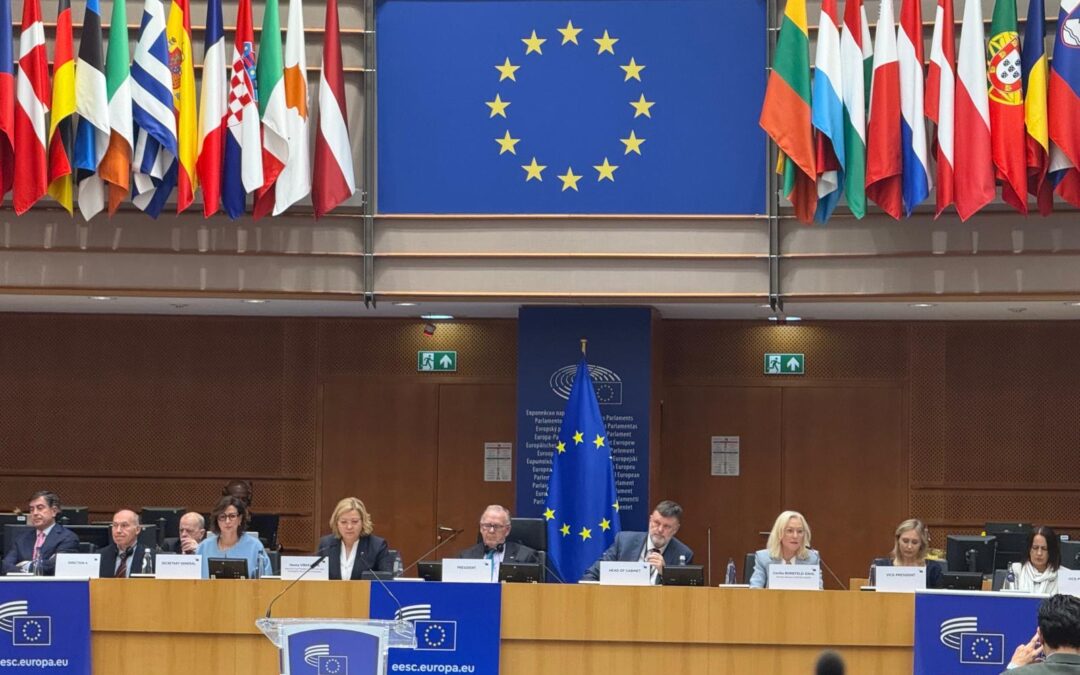
CESE, PLENARIA: ULGIATI INTERVIENE SULLA SOVRANITÀ UE NEL CLOUD
Il futuro digitale dell’Unione Europea sarà decisivo per il suo futuro democratico. Senza promuovere e proteggere la sovranità digitale, quella dei dati, l’innovazione, gli investimenti, il lavoro, la competitività, i diritti fondamentali, non può esserci vera autonomia strategica, né società dell’informazione resiliente, né ruolo credibile per la UE in un ordine globale sempre più segnato da conflitti e tensioni geopolitiche. Il tema è stato affrontato nel Parere TEN/878 del Comitato Economico e Sociale Europeo (CESE), adottato nel corso della Sessione Plenaria di Ottobre. Il Comitato ritiene che l’unico modo per garantire competitività economica, autodeterminazione democratica e sicurezza sia ridurre la dipendenza da fornitori di cloud, Intelligenza Artificiale e piattaforme non UE, puntando a raggiungere una strategia di sovranità digitale trasversale che copra l’intera catena di approvvigionamento digitale, con regole chiare su protezione dei dati, trasparenza, diversificazione ed interoperabilità. Per il Consigliere Ulgiati, intervenuto sull’argomento, «È fondamentale in Europa raggiungere una sovranità nel cloud, ma superare le dipendenze digitali e proteggere i dati significa avere una indipendenza strategica su tutta la pila tecnologica (tech stack): dall’energia indispensabile per il funzionamento dei data center, alle terre rare necessarie per la produzione di microchip, dalla ricerca e sviluppo di nuovi chip sempre più performanti, al cloud. Tutto ciò però non basta – avverte l’esponente del CESE – perché occorre mettere al centro l’uomo, investire in nuove competenze dei lavoratori, indispensabili per avere una capacità gestionale su tutta la filiera. L’Europa è indietro rispetto ai competitor americani ed asiatici ma finalmente la politica sembra aver compreso che deve mettere in atto ingenti investimenti – ha concluso Ulgiati – non solo per difendere la sovranità digitale ma anche e soprattutto per implementare una strategia umanocentrica».
UE: RELAZIONE CORTE DEI CONTI SU OCCUPAZIONE GIOVANILE
Nell’ultimo decennio una delle sfide più importanti che molti Stati membri dell’Unione Europea si sono trovati a fronteggiare in materia di occupazione è stata quella di inserire i giovani stabilmente nel mondo del lavoro. L’occupazione è competenza principalmente degli Stati membri, la cui spesa annuale per le misure di politica del mercato del lavoro per tutte le fasce di età è stata in media di circa 60 miliardi di euro dal 2014, escludendo i picchi della pandemia di circa 80 miliardi di euro nel 2020 e nel 2021. La UE sostiene e, ove necessario, integra l’azione degli Stati membri in questo settore. Dal 2014, circa 25 miliardi di euro di finanziamenti della politica di coesione sono stati destinati specificatamente alla prevenzione ed alla lotta alla disoccupazione giovanile ed all’inattività, in particolare attraverso il Fondo Sociale Europeo (FSE) e l’Iniziativa a favore dell’Occupazione Giovanile (IOG). Un Rapporto pubblicato di recente dalla Corte dei Conti Europea ha esaminato l’efficacia degli interventi sovvenzionati dalla Ue per l’occupazione giovanile in Germania, Spagna ed Italia, sottolineando come dal 2014 il tasso di disoccupazione giovanile sia sceso dal 20% al 12%. Nel 2025, i giovani disoccupati nell’Unione Europea erano, infatti, 4,7 milioni, pari all’11,6% della forza lavoro nella fascia 15-29 anni. Pertanto, nonostante i progressi registrati nell’ultimo decennio, i giovani continuano ad avere una probabilità doppia rispetto alla media di trovarsi senza lavoro. Nella sua Relazione la Corte dei Conti Ue critica soprattutto la mancanza di dati affidabili sugli effetti delle misure finanziate a distanza di tempo. Gli attuali indicatori di risultato misurano la situazione occupazionale dei beneficiari solo a sei mesi dalla fine del sostegno. Nulla è previsto a dodici o diciotto mesi che, secondo il Rapporto, sarebbero invece le scadenze più significative per valutare se un giovane si è davvero inserito stabilmente nel mercato del lavoro. Altra lacuna strutturale evidenziata riguarda il fatto che nei programmi operativi analizzati non esiste una definizione condivisa di quando un giovane possa considerarsi effettivamente integrato nel contesto lavorativo. L’assenza di questo parametro rende dunque più difficile stabilire obiettivi misurabili e valutare l’efficacia delle singole misure. La Corte raccomanda infine di fornire un sostegno più mirato ai giovani inattivi, categoria che i programmi europei faticano sistematicamente a raggiungere.
EN
EESC, PLENARY SESSION: ULGIATI SPEAKS ON EU SOVEREIGNTY IN THE CLOUD
The European Union’s digital future will be decisive for its democratic future. Without promoting and protecting digital sovereignty, that is, sovereignty over data, innovation, investment, employment, competitiveness and fundamental rights, there can be no true strategic autonomy, no resilient information society, nor any credible role for the EU in a global order increasingly marked by conflicts and geopolitical tensions. This issue was addressed in the Opinion TEN/878 of the European Economic and Social Committee (EESC), adopted during the October Plenary Session. The Committee believes that the only way to ensure economic competitiveness, democratic self-determination and security is to reduce dependence on non-EU providers of cloud services, artificial intelligence and platforms, by aiming to achieve a cross-cutting digital sovereignty strategy covering the entire digital supply chain, with clear rules on data protection, transparency, diversification and interoperability. Councillor Ulgiati, speaking on the subject, said: «It is essential for Europe to achieve sovereignty in the cloud, but overcoming digital dependencies and protecting data means having strategic independence across the entire tech stack: from the energy required to power data centres, to the rare earths needed for the production of microchips, from the research and development of new, ever-more-powerful chips, to the cloud. However, this is not enough – warns the EESC representative – because we must put people at the centre and invest in new skills for workers, which are essential for ensuring management capacity across the entire supply chain. Europe is lagging behind its American and Asian competitors, but at last policymakers seem to have realised that they must make substantial investments – concluded Ulgiati – not only to defend digital sovereignty but also, and above all, to implement a human-centred strategy».
EU: COURT OF AUDITORS’ REPORT ON YOUTH EMPLOYMENT
Over the past decade, one of the most significant challenges many European Union Member States have faced in the field of employment has been that of integrating young people into the labour market on a permanent basis. Employment is primarily the responsibility of the Member States, whose annual expenditure on labour market policy measures for all age groups has averaged around 60 billion euros since 2014, excluding the pandemic-related peaks of around 80 billion euros in 2020 and 2021. The EU supports and, where necessary, complements the actions of Member States in this area. Since 2014, around €25 billion in cohesion policy funding has been specifically allocated to preventing and tackling youth unemployment and inactivity, in particular through the European Social Fund (ESF) and the Youth Employment Initiative (YEI). A Report recently published by the European Court of Auditors examined the effectiveness of EU-funded youth employment measures in Germany, Spain and Italy, highlighting that since 2014 the youth unemployment rate has fallen from 20 per cent to 12 per cent. In 2025, there were, in fact, 4.7 million unemployed young people in the European Union, accounting for 11.6 per cent of the labour force aged 15–29. Consequently, despite the progress made over the last decade, young people are still twice as likely as the average to be unemployed. In its Report, the European Court of Auditors criticises, in particular, the lack of reliable data on the long-term effects of the measures funded. The current outcome indicators measure the employment situation of beneficiaries only six months after the end of the support. No assessment is carried out at twelve or eighteen months, timeframes which, according to the Report, would in fact be the most significant for assessing whether a young person has genuinely become permanently integrated into the labour market. Another structural shortcoming highlighted concerns the fact that, in the operational programmes analysed, there is no agreed definition of when a young person can be considered to have effectively integrated into the labour market. The absence of this parameter therefore makes it more difficult to set measurable objectives and assess the effectiveness of individual measures. Finally, the Court recommends providing more targeted support to economically inactive young people, a group that European programmes consistently struggle to reach.
UGL NEWS dall'EUROPA n. 193 del 2 Novembre 2026EN - UGL NEWS from EUROPE n. 193 - 2nd of November 2026


